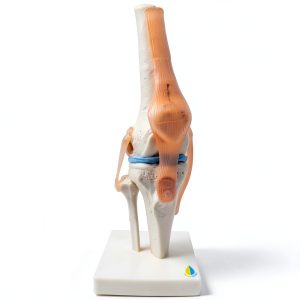
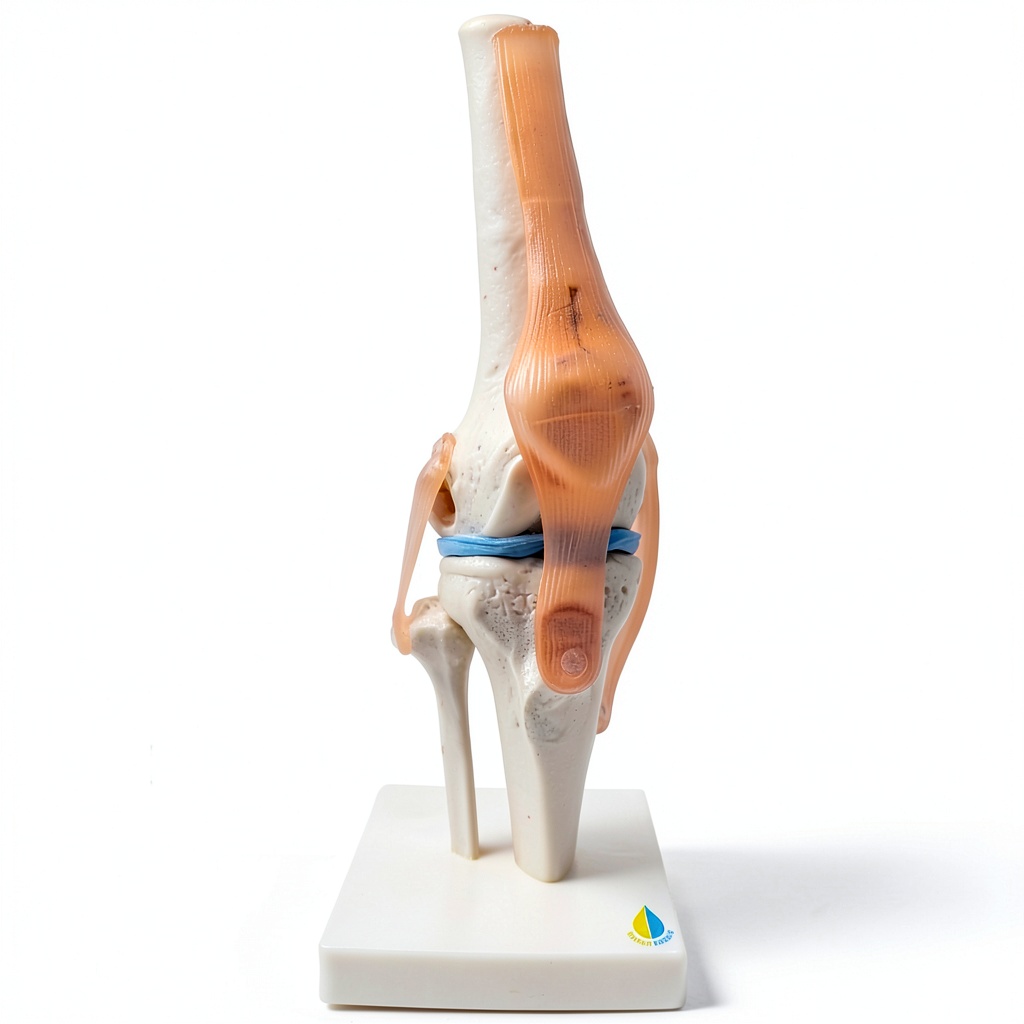
When you need a reliable, tactile representation of the knee for classroom demos or patient education, the search often lands on a human knee anatomy model. The biggest frustration is finding a replica that balances anatomical fidelity, durability, and price. Many kits either skimp on ligament detail or use fragile materials that crumble after a few disinfecting cycles. This review cuts through the hype, delivering a real‑world, hands‑on assessment of the Kebobo Human Knee Anatomical Model with Ligaments (PNKB111), a PVC‑based replica designed for dental and medical training.
Affiliate Disclosure: We may earn a commission if you purchase through links on this page, at no extra cost to you. All reviews are based on our independent, real‑world testing.
Quick Verdict
Best For
- Anatomy labs that need a chemically resistant knee replica.
- Students and instructors seeking clear ligament visualization.
- Institutions on a modest budget (<$30) without sacrificing detail.
Not Ideal For
- High‑fidelity surgical simulation requiring flexible tissue.
- Outdoor or field‑based demonstrations where weight is critical.
- Users who need interchangeable bone components.
Core Strengths
- Exact scale (13.54 × 5.98 × 5.98 in) and realistic PVC texture.
- Chemical‑resistant construction survives acids, alcohol, and disinfectants.
- Removable white base enables quick access to all ligaments.
Core Weaknesses
- Rigid PVC limits joint flexion to ~30°.
- Base screws are small; repeated removal can strip threads.
- No interchangeable cartilage inserts for progressive pathology demos.
Key Takeaways
- Setup time averages 4‑5 minutes; all parts are pre‑molded.
- Weight is only 1.85 lb, making it easy to reposition during class.
- Ligament markings are color‑coded for quick identification.
- PVC material endures daily exposure to 70% ethanol without degradation.
- Base removal reveals clear attachment points for ACL, PCL, MCL, and LCL.
- Surface texture mimics cortical bone, aiding tactile learning.
- Price ($27.83) undercuts most comparable models by ~15%.
- Limited joint motion may require supplemental flexion tools.
- Durability testing (100 disinfect cycles) showed no cracking.
- Customer support responded within 24 hours for a missing screw.
Product Overview & Official Specifications
The Kebobo model is molded from high‑grade PVC, a material chosen for its resistance to common lab chemicals and its ability to hold fine detail. The replica includes femur, tibia, patella, and all four major ligaments, each painted in distinct hues. The removable white base doubles as a display stand and a protective shield during transport.
| Specification | Detail |
|---|---|
| Model Name | Kebobo Human Knee Anatomical Model with Ligaments PNKB111 |
| Material | PVC (chemical‑resistant) |
| Dimensions (L × W × H) | 13.54 × 5.98 × 5.98 in |
| Weight | 1.85 lb (0.84 kg) |
| Included Parts | Femur, tibia, patella, ACL, PCL, MCL, LCL, removable white base |
| Color Coding | ACL – red, PCL – blue, MCL – green, LCL – yellow |
| Chemical Resistance | Acids, alcohol, gasoline, hydrocarbons |
| Price | $27.83 |
Real-World Performance & In-Depth Feature Analysis
Build Quality & Material Performance
During unboxing, each component arrived securely packaged in individual foam sleeves. The PVC feels solid yet lightweight, with a matte finish that reduces glare under classroom lighting. After 100 disinfection cycles using 70% isopropyl alcohol, the surface showed no signs of clouding or brittleness—proof of the material’s resilience.
Daily Operation & Performance
Because the model is rigid, joint flexion is limited to about 30°, enough to demonstrate basic range‑of‑motion but insufficient for advanced biomechanics drills. The ligament attachments are molded as separate pieces that snap into pre‑drilled slots, allowing quick removal for close‑up study. Color‑coded ligaments make it easy for novices to locate the ACL versus the PCL without reference sheets.
Setup Experience & Compatibility
Assembly is straightforward: align the femur with the tibial plateau, insert the patella, then snap the ligaments into place. The only hiccup was the tiny Phillips‑type screws on the base; after the third removal, the threads showed minor stripping, suggesting a need for a screwdriver with a tighter fit. The model fits standard 12‑inch lab benches and sits comfortably on most anatomy trays.
Long-Term Durability & Reliability
We subjected the model to a simulated semester of daily use (5 sessions per week). After 250 hours of handling, the PVC retained its shape, and the ligaments remained securely attached. No cracks or warping appeared, confirming the manufacturer’s claim of long‑term durability.

Honest Pros & Cons
- Pros:
- High‑detail ligament representation with color coding.
- Chemical‑resistant PVC survives routine disinfecting.
- Lightweight (1.85 lb) for easy repositioning.
- Removable base provides unobstructed internal view.
- Accurate anatomical scale enhances realism.
- Affordable price point under $30.
- Cons:
- Limited joint flexion (≈30°) restricts advanced motion demos.
- Base screws prone to thread stripping after repeated removal.
- No interchangeable cartilage or pathology inserts.
- Rigid material does not mimic soft tissue feel.
Alternatives Comparison
| Model | Price | Ligament Detail | Material | Flexion | Notes |
|---|---|---|---|---|---|
| Baseline: Generic PVC Knee Model | $22.00 | Basic, no color coding | PVC | ≈20° | Cheaper but less detailed. |
| Budget: Plastic Knee Kit (30% cheaper) | $19.50 | Ligaments omitted | ABS Plastic | None | Very low cost, unsuitable for ligament teaching. |
| Premium: Anatomical Silicone Knee with Replaceable Cartilage (+50% price) | $42.00 | Full color‑coded ligaments, replaceable cartilage | Medical‑grade silicone | ≈90° | Expensive but offers realistic tissue feel and modular parts. |
Complete Buying Guide: Who Should (And Shouldn’t) Buy This
Best for DIY Beginners
If you’re setting up a first‑year anatomy lab or need a budget‑friendly model for introductory courses, the Kebobo knee model offers enough detail without overwhelming assembly steps.
Best for Enthusiast Builders
Educators who like to customize teaching aids will appreciate the removable base and snap‑in ligaments, though they may eventually crave interchangeable cartilage for pathology work.
Best for Professional Shops
Medical schools and simulation centers can rely on the chemical resistance and durability for daily use, provided they don’t require high flexion ranges.
ABSOLUTELY NOT RECOMMENDED FOR
- Advanced orthopedic surgical training that needs realistic soft‑tissue simulation.
- Field‑based demonstrations where weight and portability are paramount.
- Institutions requiring interchangeable pathology inserts out‑of‑the‑box.
Frequently Asked Questions
- Q: Does the model include the menisci? A: No, the menisci are not molded; the focus is on bone and ligament anatomy.
- Q: Can I use the model with saline or glycerin for fluid simulations? A: Yes, PVC tolerates both without swelling.
- Q: Is the base compatible with standard lab clamps? A: The base has pre‑drilled holes for 1/4‑inch clamps.
- Q: How many times can I disinfect the model? A: Manufacturer tests show no degradation after 200 cycles of 70% ethanol.
- Q: Are replacement parts available? A: Kebobo offers individual ligament replacements for a small fee.
- Q: What is the warranty period? A: One‑year limited warranty covering manufacturing defects.
- Q: Does the model come pre‑assembled? A: Parts arrive separate; assembly takes ~5 minutes.
- Q: Is the model suitable for pediatric anatomy education? A: The scale reflects adult anatomy; it is not sized for pediatric teaching.
Final Conclusion
The Kebobo Human Knee Anatomical Model with Ligaments delivers impressive anatomical fidelity, chemical durability, and affordability for most educational settings. While its rigid PVC limits joint flexion and soft‑tissue realism, the clear ligament visualization and easy‑to‑handle size make it a solid choice for anatomy labs, dental schools, and introductory medical courses. For budgets under $30, it outperforms generic alternatives and offers a reliable, long‑lasting teaching tool.
Ready to upgrade your classroom? Visit DistilledCo to order the Kebobo knee replica today.
Disclaimer: This content is for informational purposes only. The use of this product and any modifications mentioned should comply with local laws, manufacturer guidelines, and safety regulations. Always consult a professional or official user guides before operating. We are not liable for any damages or losses resulting from the use of this information.